Diet Before and After Surgery in Ahmedabad
Written by Palak, Clinical Dietitian. Reviewed by Dr Arth Shah, MCh Plastic & Reconstructive Surgery.
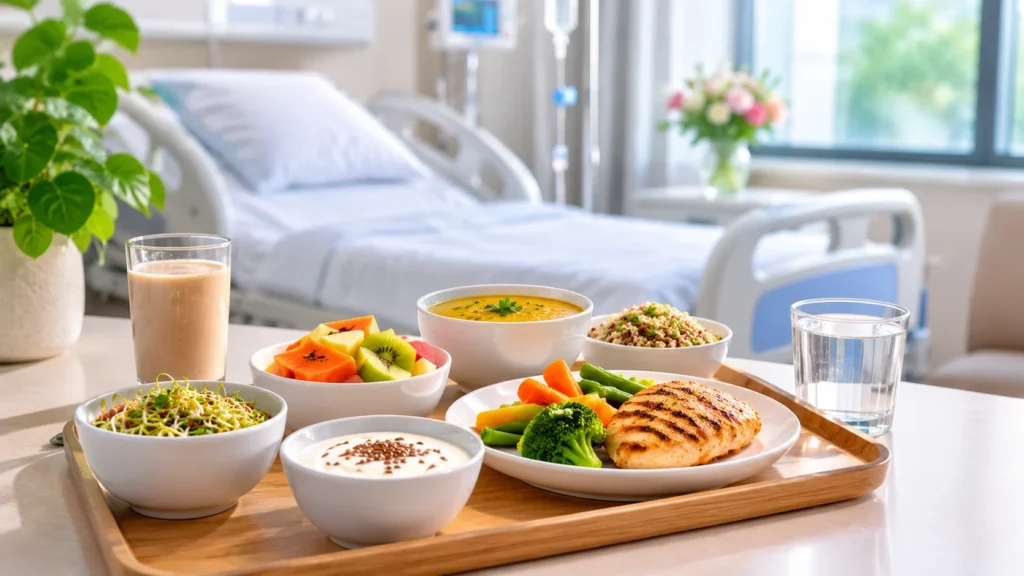
Your body needs more protein, fluids and certain vitamins and minerals to heal after surgery. Eating well in the weeks before and after an operation helps wounds heal, reduces infection risk and speeds recovery. Our dietitian plans this with your surgeon, around the food you already eat.
Most diet advice fails for one of two reasons: it does not fit the food people actually eat, or it does not fit the medical reality they are living with. A plan that bans rotli and dal is not going to last in a Gujarati kitchen. A plan that ignores your diabetes medicines, your thyroid tablet or your recent surgery can do harm. This department exists to close both gaps. Plans are built around your home food and routine, and they are made with your medical picture in view – your reports, your medicines, and your doctor. |
Why nutrition affects healing
Healing uses protein to rebuild tissue, iron to carry oxygen, vitamin C and zinc to make new skin and collagen, and plenty of fluid. People who go into surgery short of protein or iron tend to heal more slowly and feel tired for longer.
In the weeks before surgery
- Protein at every meal – dal, paneer, curd, eggs, fish or chicken, sprouts, soya.
- Correct any deficiency – iron, vitamin B12 and vitamin D are checked where needed.
- Blood sugar well controlled if you have diabetes.
- Stop smoking; avoid alcohol.
- Tell your surgeon about all supplements – some, such as fish oil or high-dose vitamin E, may affect bleeding.
The first days after
Start with fluids and light food as advised – soups, dal water, khichdi, curd, fruit. Build back to normal meals as appetite returns. Small, frequent meals are easier than three large ones.
Weeks two to six
Nutrient | Why | Everyday sources |
Protein | Rebuilds tissue | Dal, paneer, curd, eggs, chicken, fish, soya, sprouts |
Iron | Replaces blood loss, fights tiredness | Green leafy vegetables, dates, jaggery in moderation, meat; with vitamin C |
Vitamin C | Collagen and wound strength | Amla, citrus, guava, tomatoes |
Zinc | Skin repair | Nuts, seeds, whole grains, pulses |
Fluids | Circulation and bowel health | Water, buttermilk, soups, coconut water |
Preventing constipation
Painkillers, less movement and anaesthesia often cause constipation – which is uncomfortable and strains healing tummy muscles after a tummy tuck. Fluids, fibre (vegetables, fruit, whole grains, isabgol if advised) and gentle walking help.
Special cases
- Tummy tuck and body contouring: protein and constipation matter most.
- Burns and large wounds: much higher protein and calorie needs.
- Diabetes: steady blood sugar is one of the biggest factors in wound healing.
- After bariatric surgery: See the post-bariatric diet page.
Your doctor: Dr Arth Shah, MS, MCh (Plastic Surgery)
Skin treatments at Rejuva Aesthetica are overseen by Dr Arth Shah, who completed his MBBS at Gujarat University in 2009, his MS in General Surgery at Sardar Patel University, Vallabh Vidyanagar in 2014, and his MCh in Plastic and Reconstructive Surgery at B.J. Medical College, Ahmedabad in 2017. He is registered with the Gujarat Medical Council under registration number G-25994 and has practised in Ahmedabad since 2018.
Book a skin consultation in Ahmedabad
A skin consultation takes about twenty minutes. Come without makeup. Your skin type and concern are assessed, the right peel and depth are chosen, and you are told how many sessions you are likely to need and what the whole course costs. If your skin needs preparing first, that starts before the peel does.
Rejuva Aesthetica – Plastic & Cosmetic Surgery Clinic 102, Himalaya Emerald, Besides IOC Petrol Pump, Near Shivranjani Over Bridge, Jodhpur, Ahmedabad, Gujarat 380015 Phone: +91 74360 00990 | 079 2692 9299 Monday to Saturday, 9:00 AM to 7:00 PM. Closed Sundays and public holidays. |
Frequently Asked Question
Protein at every meal, plenty of fluids, fruit and vegetables for vitamin C, and foods rich in iron and zinc. Small, frequent meals help while appetite is low.
Usually more than normal. Your dietitian works out an amount based on your weight, the operation and your kidney function.
Yes - dal, paneer, curd, soya, sprouts and milk, spread across the day, can meet the need.
Only if a deficiency is found or your surgeon agrees. Some supplements affect bleeding, so tell your surgeon about all of them.
Drink plenty, eat fibre, walk gently, and ask about a mild laxative or isabgol if needed.
Start Today
Ready to Get Started?
Book a complimentary consultation to discuss your goals and receive a personalised treatment plan.