Diet & Wellness in Ahmedabad - Clinical Nutrition with a Surgical Team
Written by Palak, Clinical Dietitian. Reviewed by Dr Arth Shah, MCh Plastic & Reconstructive Surgery.
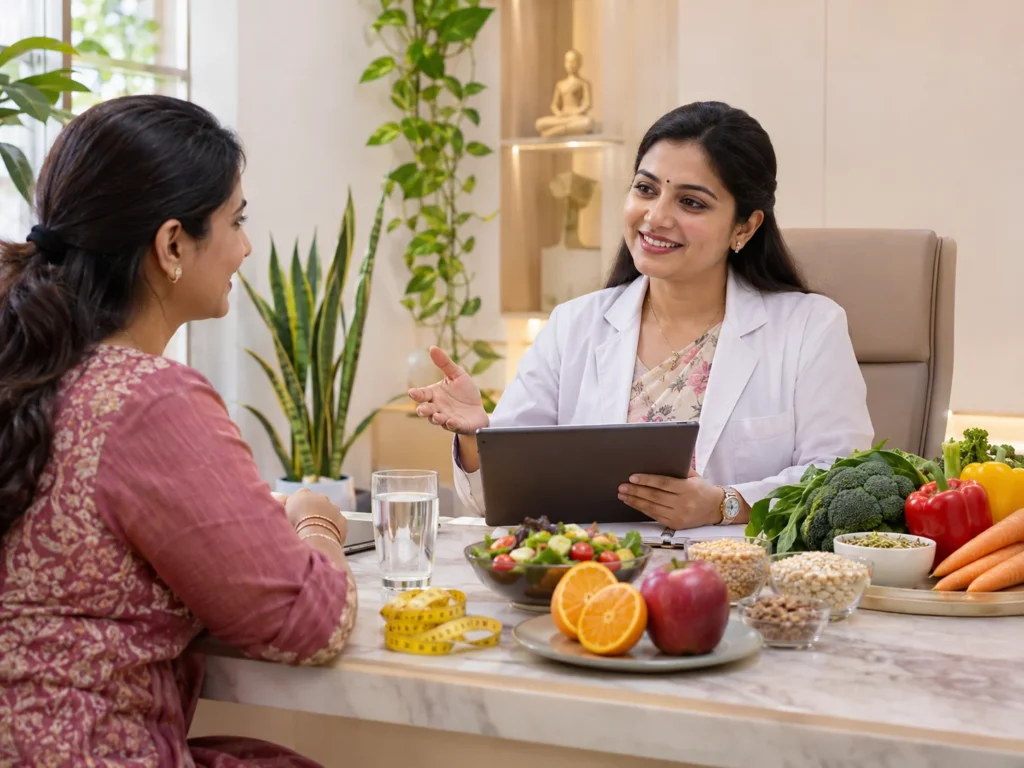
Rejuva Aesthetica’s Diet & Wellness department is led by clinical dietitian Palak. She builds practical eating plans – using the food you already cook at home – for type 2 diabetes, PCOS, thyroid problems, fatty liver, cholesterol, digestive problems, deficiencies, pregnancy, recovery after surgery, life after bariatric surgery, and strength and bone health for women over 50. She works alongside your own doctor and, where relevant, our surgical team. Consultations are in person in Ahmedabad, with online follow-ups available.
Most diet advice fails for one of two reasons: it does not fit the food people actually eat, or it does not fit the medical reality they are living with. A plan that bans rotli and dal is not going to last in a Gujarati kitchen. A plan that ignores your diabetes medicines, your thyroid tablet or your recent surgery can do harm. This department exists to close both gaps. Plans are built around your home food and routine, and they are made with your medical picture in view – your reports, your medicines, and your doctor. |
What makes this different
- A clinical dietitian, not a general nutrition coach.
- A surgical team under the same roof. Nutrition before and after surgery is planned with the surgeon who operates.
- Food you already eat. Rotli, bajra, dal, kadhi, sabzi – adjusted, not banned.
- Based on your reports. Blood sugar, HbA1c, thyroid, lipids, liver, vitamin levels – plans change as the numbers change.
- With your doctor, never instead of them. We never change medicines. We keep your doctor informed.
What we help with
Recovery after surgery
Good nutrition speeds wound healing and recovery. Protein, iron, vitamin C and zinc matter most, along with fluids and fibre to avoid constipation. Planned before and after any operation at the clinic. Read more about eating for recovery after surgery.
Type 2 diabetes
For many people with type 2 diabetes, especially in the first years, sustained weight loss can bring blood sugar back into the normal range without medicines – called remission. It needs medical supervision, because medicines often need adjusting as the diet changes. Read about diabetes remission diet plans.
PCOS and PCOD
Most women with PCOS have some degree of insulin resistance. Eating to steady blood sugar – with regular activity and, where needed, weight loss – can improve periods, skin and hair. We work alongside acne and hair treatment at the clinic. Read about PCOS and PCOD diet and lifestyle.
After bariatric surgery
After a sleeve or bypass, eating changes for life: small portions, protein first, lifelong vitamins, and regular blood tests. Good nutrition also prepares you for body contouring later. Read about diet after bariatric surgery.
Fatty liver
Fatty liver – now often called MASLD – is common and usually silent. Losing even 7-10% of body weight can reduce liver fat substantially. Reducing sugary drinks, refined flour and fried snacks matters more than any single “liver food”. See the NHS overview.
Strength and bone health for women over 50
After menopause, women lose muscle and bone faster. Enough protein at every meal, calcium, vitamin D and strength exercise help protect bones, balance and joints – and reducing excess weight takes load off painful knees. For many women, the aim is staying strong and active and putting off joint surgery for as long as possible. See the International Osteoporosis Foundation.
Pregnancy
Folic acid, iron, calcium and enough protein matter, and some foods are best avoided. Plans support your obstetrician’s care, including for gestational diabetes – they never replace it. See foods to avoid in pregnancy.
Thyroid
Diet supports thyroid treatment but does not replace it. Take your thyroid tablet on an empty stomach, apart from calcium, iron and soy, as your doctor advises. We help with weight, energy and cholesterol that often come with an underactive thyroid.
IBS and digestive problems
Bloating, pain and changing bowel habits can often be eased with changes such as a guided low-FODMAP approach – done in stages with a dietitian, not permanently. See NICE guidance on IBS. See a doctor first if you have weight loss without trying, blood in the stool, symptoms that wake you at night, or new bowel symptoms after 50.
Cholesterol
More fibre (oats, dal, vegetables), fewer fried and packaged foods, healthier cooking oils in sensible amounts, and weight loss where needed. Diet works alongside medicines your doctor prescribes, not instead of them.
Nutritional deficiencies
Iron, vitamin B12 and vitamin D deficiencies are very common in India, and cause tiredness, low mood – and hair fall. We read your reports and plan food and supplements to correct them, alongside hair and skin treatment where relevant.
How it works
Step | What happens |
1. Consultation (45-60 min) | Your health history, medicines, reports, routine, food habits and goals |
2. Your plan | A written plan built around your food and schedule – with swaps, not bans |
3. Follow-ups | Regular check-ins to adjust the plan as your weight and reports change |
4. Working with your doctor | We share progress with your doctor where relevant; any medicine change is your doctor’s decision |
What we do not do
- Crash diets, detox teas or “lose 10 kg in 10 days” plans.
- Change or stop medicines.
- Sell supplements you do not need.
- Treat eating disorders on our own – if food, weight or eating feel out of control, we will help you find the right support.
Fees
Service | Fee |
First consultation | Contact our clinic |
Follow-up | Contact our clinic |
Monthly programme | Contact our clinic |
Surgical patients – pre and post-operative nutrition | Contact our clinic |
Your doctor: Dr Arth Shah, MS, MCh (Plastic Surgery)
Skin treatments at Rejuva Aesthetica are overseen by Dr Arth Shah, who completed his MBBS at Gujarat University in 2009, his MS in General Surgery at Sardar Patel University, Vallabh Vidyanagar in 2014, and his MCh in Plastic and Reconstructive Surgery at B.J. Medical College, Ahmedabad in 2017. He is registered with the Gujarat Medical Council under registration number G-25994 and has practised in Ahmedabad since 2018.
Book a skin consultation in Ahmedabad
A skin consultation takes about twenty minutes. Come without makeup. Your skin type and concern are assessed, the right peel and depth are chosen, and you are told how many sessions you are likely to need and what the whole course costs. If your skin needs preparing first, that starts before the peel does.
Rejuva Aesthetica – Plastic & Cosmetic Surgery Clinic 102, Himalaya Emerald, Besides IOC Petrol Pump, Near Shivranjani Over Bridge, Jodhpur, Ahmedabad, Gujarat 380015 Phone: +91 74360 00990 | 079 2692 9299 Monday to Saturday, 9:00 AM to 7:00 PM. Closed Sundays and public holidays. |
Frequently Asked Question
Yes, at the clinic in Jodhpur, Ahmedabad. Online follow-ups are also available.
No. Plans adjust portions, timing and what you eat alongside them - familiar food makes a plan last.
For many people with type 2 diabetes, sustained weight loss can lead to remission. It needs medical supervision because medicines often need adjusting. Type 1 diabetes cannot be reversed.
No. Please bring recent reports and a list of your medicines.
No. Only your doctor can do that. We keep them informed of your progress.
Yes. Eating to steady blood sugar, regular activity and weight loss where needed can improve periods, skin and hair.
Yes - good nutrition before and after surgery helps healing. Ask when you book your surgery.
Typically every two to four weeks at first.
Recent blood reports, your medicine list, and if possible a note of what you ate over three days.
Start Today
Ready to Get Started?
Book a complimentary consultation to discuss your goals and receive a personalised treatment plan.