Keloid Treatment in Ahmedabad
Written and medically reviewed by Dr Arth Shah, MBBS (Gujarat University, 2009), MS General Surgery (Sardar Patel University, 2014), MCh Plastic & Reconstructive Surgery (B.J. Medical College, Ahmedabad, 2017). Gujarat Medical Council registration G-25994.
A keloid is a scar that keeps growing beyond the original wound. Cutting it out on its own usually fails – it tends to grow back, sometimes bigger. The treatments that work are combined: steroid injections every few weeks, silicone and pressure, and surgery only as part of that plan, especially for earlobe keloids. Keloids can be flattened, softened and kept under control, but they need follow-up. In Ahmedabad, injections cost around Rs per session and earlobe keloid surgery around Rs.
If you have a keloid, you have probably been told one of two things: that nothing can be done, or that it can simply be cut out. Neither is quite right.
Keloids can be treated – they can be made flatter, softer and less itchy, and often much less noticeable. But cutting one out and leaving it is the most common reason people end up with a bigger keloid than they started with. This page explains why, what works instead, and what it costs in Ahmedabad.
What a keloid is
When skin heals, it makes scar tissue. In some people, that process does not switch off. The scar keeps growing, spreading beyond the edges of the original wound into a raised, firm, shiny lump. It may itch, feel tender, or look darker than the surrounding skin. Keloids can follow a surgical cut, an ear piercing, acne, a vaccination or even a scratch you barely noticed. They are not cancer and are not contagious. They are more common in brown and black skin, often run in families, and usually appear between the teens and thirties.
Keloid or thick scar?
| Keloid | Thick (hypertrophic) scar |
Spreads beyond the wound | Yes | No |
Improves on its own | Rarely | Often, over one to two years |
Returns after surgery | Often | Less often |
A thick scar that stays within the wound is treated differently, and may respond well to scar revision once it has matured. Telling the two apart is the first part of your consultation.
Why keloids come back after surgery
When surgery is used, it is always combined with treatments that reduce regrowth: steroid injections into the wound, pressure or silicone for several months, and in selected cases low-dose radiotherapy shortly after surgery. With this approach, results are far better.
Where keloids form
Area | Common cause | Usual approach |
Earlobe | Ear piercing | Surgery with steroid injection and pressure earrings – good results |
Chest | Acne, minor scratches | Injections, silicone and laser first; surgery avoided where possible |
Shoulders and upper back | Acne, vaccination | Injections first |
Jawline and neck | Acne, shaving | Injections; surgery in selected cases |
Surgical scars | Caesarean section and other operations | Injections and silicone |
The chest and shoulders are under constant tension from breathing and movement, which makes keloids there more likely to return after surgery. Earlobes are not under tension, which is why they respond well.
Treatment options
Steroid injections
A steroid is injected directly into the keloid every four to six weeks. Most keloids flatten and soften over several sessions, and itching often improves quickly. Sometimes another medicine, 5-fluorouracil, is added for keloids that do not respond.
Silicone and pressure
Silicone gel or sheets used every day soften and flatten scars. Pressure – special earrings for earlobes, or garments for the body – helps stop regrowth after other treatment.
Surgery – only as part of a plan
Surgery removes the bulk of a keloid and is especially useful for earlobes and large, thick keloids. It is always combined with steroid injections and pressure or silicone afterwards, and follow-up for many months. Sometimes a thin rim of the keloid is left in place deliberately, because cutting into normal skin can trigger a new keloid.
Laser, cryotherapy and other options
Laser can reduce redness and thickness and help injected medicine work – see laser treatment. Freezing the keloid (cryotherapy) can shrink it but may lighten brown skin. Low-dose radiotherapy after surgery is used for keloids that keep coming back, at a radiotherapy centre.
Earlobe keloids after piercing
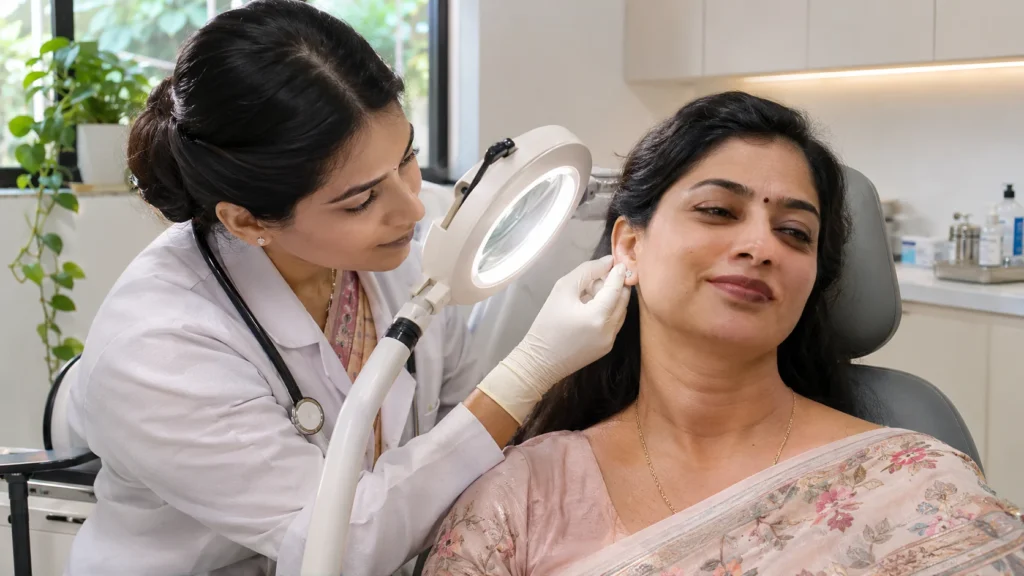
Earlobe keloids are among the most common keloids we see, often after ear piercing in childhood or after re-piercing. They respond well to a combined approach.
- The keloid is removed carefully, preserving the natural shape of the earlobe.
- A steroid injection is given at the time of surgery, and repeated over the following months.
- Pressure earrings are worn for several months to reduce regrowth.
- Re-piercing, if wanted, is discussed later and done carefully in a different spot.
Keloids on brown skin
Keloids are more common in darker skin, and treatment needs care. Steroid injections can make the surrounding skin thinner and paler, sometimes with small visible blood vessels. On brown skin, a pale patch can be noticeable. We inject into the keloid itself and adjust the dose to reduce this. Freezing can also lighten skin, so it is used cautiously.
What happens at your visit
- Assessment: how long the keloid has been there, what caused it, whether it is growing, and any past treatment.
- Diagnosis: keloid or thick scar, and whether anything else needs ruling out.
- Plan: usually injections first; surgery with adjuvant treatment for earlobes and large keloids.
- Treatment: injections take a few minutes; earlobe surgery is done under local anaesthetic.
Recovery and follow-up
Injections need no downtime – you may have mild soreness for a day. After earlobe surgery, stitches come out in about a week and pressure earrings are worn for several months. Follow-up visits every few weeks allow further injections at the first sign of regrowth.
Results timeline
Itching often eases after the first injection. Flattening builds over three to six sessions, several months in total. After surgery, regular review continues for at least a year, because regrowth – if it happens – usually starts within that time.
Keloid treatment cost in Ahmedabad
Treatment | Approximate cost in Ahmedabad |
Consultation | Contact our clinic |
Steroid injection – per session | Contact our clinic |
Earlobe keloid surgery (one ear) | Contact our clinic |
Pressure earrings | Contact our clinic |
Laser – per session | Contact our clinic |
Larger keloid surgery | Contact our clinic |
Comparing the options
| Injections | Surgery + adjuvants | Surgery alone |
Best for | Most keloids | Earlobes, large keloids | Not recommended |
Recurrence | Lower | Lower | High |
Downtime | None | About a week | About a week |
Sessions | Several | Surgery plus follow-up injections | One – then often regrowth |
If you know you form keloids
- Tell every doctor and surgeon before any procedure, including a caesarean section.
- Think carefully before piercings and tattoos, especially on the chest, shoulders and ear cartilage.
- Treat acne early on the chest, back and jawline – see acne treatment.
- After any wound, start silicone early and come in at the first sign of thickening.
Your doctor: Dr Arth Shah, MS, MCh (Plastic Surgery)
Skin treatments at Rejuva Aesthetica are overseen by Dr Arth Shah, who completed his MBBS at Gujarat University in 2009, his MS in General Surgery at Sardar Patel University, Vallabh Vidyanagar in 2014, and his MCh in Plastic and Reconstructive Surgery at B.J. Medical College, Ahmedabad in 2017. He is registered with the Gujarat Medical Council under registration number G-25994 and has practised in Ahmedabad since 2018.
Book a consultation in Ahmedabad
Bring photographs of how the keloid has changed and details of any past treatment. We will tell you whether it is a keloid or a thick scar, which treatments suit it, and what they will cost.
Rejuva Aesthetica – Plastic & Cosmetic Surgery Clinic 102, Himalaya Emerald, Besides IOC Petrol Pump, Near Shivranjani Over Bridge, Jodhpur, Ahmedabad, Gujarat 380015 Phone: +91 74360 00990 | 079 2692 9299 Monday to Saturday, 9:00 AM to 7:00 PM. Closed Sundays and public holidays. |
Frequently Asked Question
Keloids can be flattened, softened and controlled, but they can come back. A combined plan with follow-up gives the best long-term result.
Removing a keloid creates a new wound, which can heal the same way again. Surgery alone often fails; it works best combined with steroid injections, pressure or silicone.
It depends on the size, number and site of keloids and the number of sessions.
Usually three to six sessions, four to six weeks apart, though some keloids need more.
There is a brief sting. Numbing cream or local anaesthetic can make it more comfortable.
A keloid grows beyond the original wound and rarely improves on its own. A hypertrophic scar stays within the wound and often improves over time.
Yes, and they often respond well to removal combined with steroid injections and pressure earrings.
It is possible later, with care and in a different spot, but there is a risk the keloid returns. This is discussed after treatment.
They can thin and lighten the surrounding skin and cause small visible blood vessels. Careful injection into the keloid reduces this
No. Keloids are benign. A lump that behaves unusually may be examined to rule out anything else
Keloids are more common in darker skin, often run in families, and usually appear between the teens and thirties.
Partly. If you form keloids, avoid unnecessary piercings and tattoos, treat acne early, and start silicone early after any wound.
Laser can reduce redness and thickness and help injected medicine work, usually as part of a combined plan.
Chest keloids are under constant tension and often return after surgery, so injections, silicone and laser are usually tried first.
Itching often improves soon after the first steroid injection.
Usually not, as it is often considered cosmetic, although a painful or functional problem may be assessed differently. Check with your insurer.
Yes, usually with gentle, non-surgical options first.
It may be a keloid or a thick scar. Both can be treated; an assessment tells them apart.
With follow-up, results can last well. Regrowth, if it happens, usually starts within the first year, when early injections can control it.
Yes. Injection plans need visits every few weeks, which we can plan around travel.
Start Today
Ready to Get Started?
Book a complimentary consultation to discuss your goals and receive a personalised treatment plan.