How to Detect Perfect Hairline? Aesthetic Guide for Natural Results
A perfect hairline is not the same for everyone. The ideal hairline depends on your face shape, forehead size, age, ethnicity, gender, hair density, and natural facial proportions. The best hairline is one that looks natural, balanced, and age-appropriate—not artificially low or too straight.
This is especially important for people considering a hair transplant.
What is a Perfect Hairline?
A perfect hairline means a hairline that suits your individual face and appears naturally grown.
It should:
Match facial proportions
Frame the face well
Look soft and irregular naturally
Suit age and maturity
Preserve future donor hair if transplant is planned
There is no one universal “best” hairline.
Key Features of a Natural Hairline
Slight Irregularity
Natural hairlines are not ruler-straight. Small irregularities make them realistic.
Proper Height
Too low can look unnatural. Too high may look older.
Temporal Balance
Corners/temples should blend naturally with the front line.
Density Transition
The front edge often has softer, finer hairs before thicker density behind.
Hairline by Face Shape
Oval Face
Most styles suit this shape. Balanced rounded hairlines often work well.
Round Face
A slightly higher or more structured hairline may elongate the face.
Square Face
Strong masculine frames may suit defined corners with soft front irregularity.
Long Face
Avoid excessively high hairlines. Balanced lower-mid placement may suit better.
Heart Shape
Soft temple design can help maintain harmony.
Hairline for Different Ages
In 20s
A youthful hairline may sit lower, but future hair loss risk must be considered.
In 30s–40s
Mature hairlines often look more natural than teenage-low hairlines.
50+
Conservative age-matched design usually gives the most believable result.
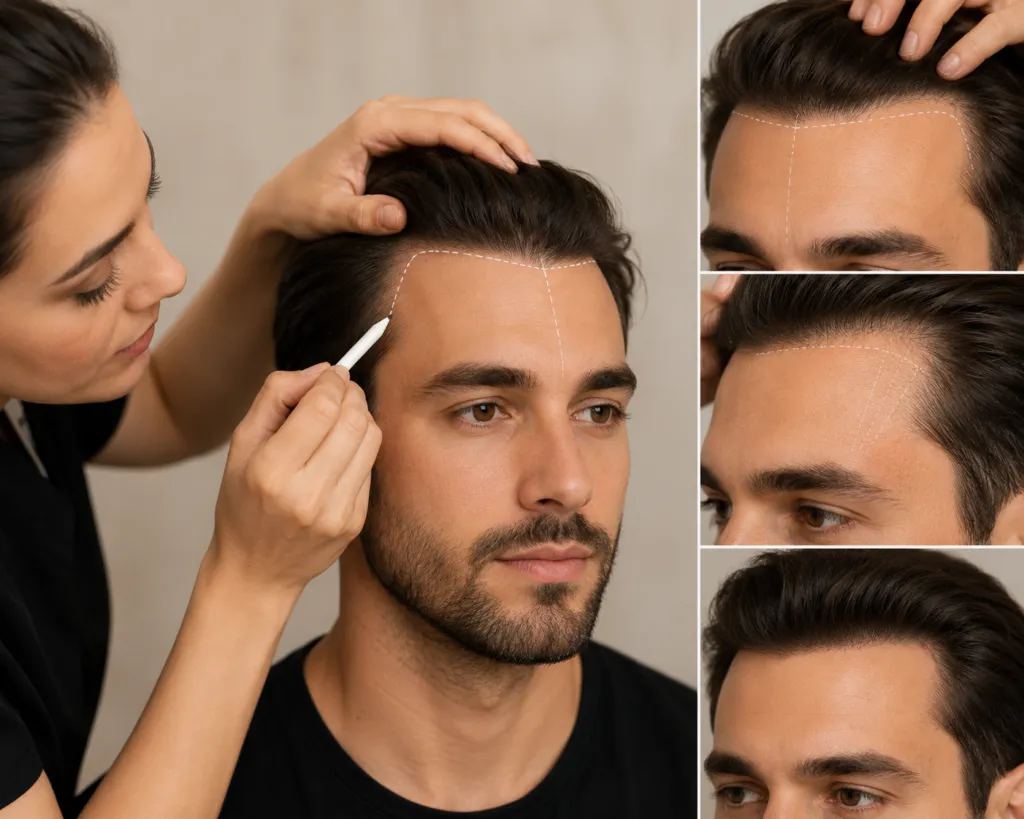
Hair Transplant Hairline Planning
When designing a transplanted hairline, surgeons consider:
Forehead measurements
Facial thirds proportion
Existing native hair
Family history of baldness
Donor graft availability
Long-term hair loss progression
A lower hairline may look attractive now but use too many grafts.
Common Mistakes to Avoid
Too Straight
Straight lines often look artificial.
Too Low
Can appear unnatural with age.
Ignoring Temples
Temple recessions must blend properly.
Copying Celebrity Hairlines
What suits another face may not suit yours.
Using Only Filters
Camera angles and apps distort proportions.
Self-Check at Home
Stand in natural light and observe:
Does the hairline match forehead width?
Are both sides reasonably balanced?
Does it look age-appropriate?
Are temples natural?
Does it frame eyes and brows well?
Photos from front and side help.
Unique Insights Most Patients Miss
Mature Hairline ≠ Baldness
Many men naturally develop a mature hairline that is normal and attractive.
Symmetry Should Be Close, Not Perfect
Human faces are naturally slightly asymmetrical. Over-perfect correction can look fake.
FAQ Section
What is considered a perfect hairline?
One that looks natural, balanced, and suits your face.
Can I lower my hairline with transplant?
Yes, in selected candidates with adequate donor area.
Is a widow’s peak attractive?
Yes, many natural hairlines include one and it can look distinctive.
Does everyone need a straight hairline?
No, straight hairlines often look less natural.
How do doctors design hairlines?
Using proportions, age, facial structure, and future loss planning.
Can women also correct hairlines?
Yes, women may seek lowering or reshaping procedures too.
Does forehead size matter?
Yes, it strongly influences ideal placement.
Final Thoughts
A perfect hairline is not about being the lowest or straightest—it is about harmony, naturalness, and long-term suitability. Whether natural or transplanted, the best hairline is one that nobody notices because it looks like it belongs there.
“Thinking about hairline correction or hair transplant? Book a consultation with our experts for a personalized natural hairline design based on your face shape and future hair goals.”