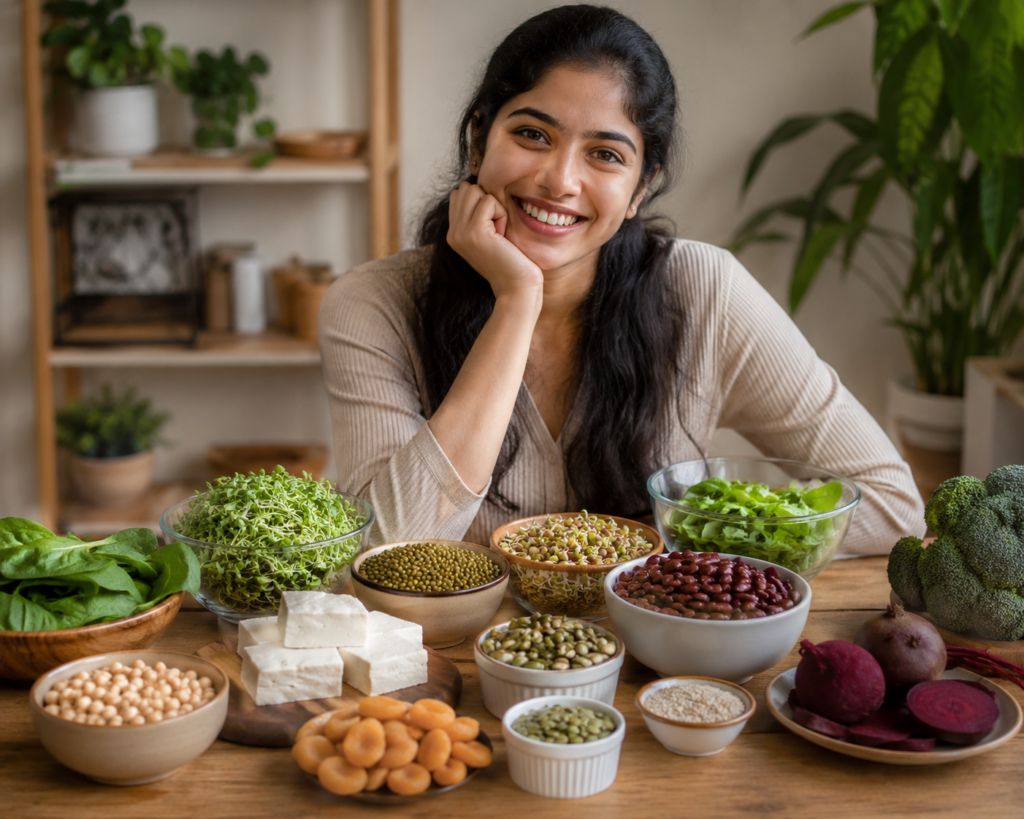
Iron-Rich Vegetarian Foods for Energy & Haemoglobin
Why Iron Is Important for the Body ?
Iron is an essential mineral required for haemoglobin production, oxygen transport, energy levels, and overall body function. A well-planned vegetarian diet can provide adequate iron through foods like spinach, lentils, jaggery, beans, seeds, and leafy greens when combined with proper absorption strategies.
Unique Insight:
Many vegetarians consume iron-rich foods regularly but still experience deficiency because plant-based iron is absorbed less efficiently than animal-based iron.
Signs & Symptoms of Low Iron
Common Symptoms
Fatigue
Weakness
Low stamina
Dizziness
Pale skin
Shortness of breath
Severe Iron Deficiency Symptoms
Hair fall
Brittle nails
Frequent headaches
Difficulty concentrating
Daily Iron Requirements
Group
Recommended Daily Iron Intake
Adult Men
8–10 mg
Adult Women
18–21 mg
Pregnant Women
Higher requirements
Teenagers
Increased growth-related needs
Practical Insight:
Women of reproductive age are more prone to iron deficiency due to menstrual blood loss.
Best Iron-Rich Vegetarian Foods
Spinach & Leafy Greens
Best Options:
Spinach (Palak)
Methi
Amaranth leaves
Benefits:
Rich in iron, folate, and antioxidants.
Lentils & Pulses
Examples:
Masoor dal
Moong dal
Chana dal
Rajma
Practical Insight:
Combining dal with lemon juice can improve iron absorption significantly.
Jaggery (Gur)
Traditional source of iron commonly used in Indian diets.
Beetroot
Supports healthy blood production and overall nutrition.
Pumpkin Seeds & Sesame Seeds
Iron-rich snack options
Easy to add to meals
Chickpeas (Chana)
Good source of iron and plant protein.
Soy Products
Examples:
Soy chunks
Tofu
Soybeans
Dry Fruits
Best Options:
Raisins
Dates
Dried figs
Indian Vegetarian Meal Ideas for Better Haemoglobin
Breakfast
Poha with peanuts and lemon
Beetroot paratha with curd
Sprouts chaat
Lunch
Palak dal with roti
Rajma chawal with salad
Chole with lemon
Evening Snacks
Roasted chana
Dates and nuts
Jaggery laddoo
Dinner
Mixed dal khichdi
Soy curry with roti
Vegetable pulao with sprouts
Practical Insight:
Vitamin C-rich foods help increase absorption of plant-based iron dramatically.
How to Improve Iron Absorption Naturally ?
Foods Rich in Vitamin C
Lemon
Amla
Orange
Guava
Tomatoes
Healthy Pairings
Iron Food
Vitamin C Pairing
Spinach
Lemon
Dal
Tomato
Chana
Amla
Sprouts
Orange
Unique Insight:
Adding lemon juice to meals is one of the simplest and most effective ways to improve iron absorption naturally.
Foods That Reduce Iron Absorption
Tea & Coffee
May reduce iron absorption if consumed immediately after meals.
Excess Calcium with Iron Meals
Can interfere with iron uptake temporarily.
Processed Foods
Often low in nutrient quality.
Practical Insight:
Waiting at least 1–2 hours after meals before drinking tea or coffee may help improve iron absorption.
Tips to Prevent Iron Deficiency
Include iron-rich foods daily
Add Vitamin C sources to meals
Avoid skipping meals
Maintain balanced nutrition
Get blood tests when needed
Unique Insight:
Chronic dieting and irregular eating habits are increasingly contributing to iron deficiency in young adults.
Frequently Asked Questions (FAQs)
Which vegetarian food has the highest iron?
Pumpkin seeds, soy products, lentils, and leafy greens are among the richest vegetarian iron sources.
Can vegetarians maintain good haemoglobin naturally?
Yes, with proper meal planning and absorption strategies.
Is jaggery good for iron deficiency?
Jaggery contains iron and can support iron intake as part of a balanced diet.
What are the early signs of low haemoglobin?
Fatigue, weakness, dizziness, and pale skin are common symptoms.
Does spinach improve haemoglobin?
Spinach contributes iron and folate that support healthy blood formation.
Should tea be avoided with iron-rich meals?
Yes, tea immediately after meals may reduce iron absorption.
When should iron supplements be taken?
Only under medical or nutritional guidance if dietary intake is insufficient or deficiency is confirmed.
Conclusion
Iron plays a vital role in maintaining healthy haemoglobin levels, energy production, and overall well-being. A balanced vegetarian diet rich in iron-containing foods and supported by proper absorption habits can effectively help prevent iron deficiency and support long-term health naturally.
“Feeling tired, weak, or concerned about low haemoglobin? Book your nutrition consultation today for a personalized vegetarian diet plan focused on improving iron intake, energy, and overall wellness.”